In my last Cue Sheet dispatch, I offered my two cents on the dire warning about the imperiled state of Texas barbecue issued by the Washington Post, which was then picked up and amplified by a range of other news outlets. I was a bit worried that I was being a little too Pollyanna-ish about matters, but that same week the folks who most closely cover the Texas barbecue beat weighed in with similar sentiments.
On June 5, Daniel Vaughn of Texas Monthly offered counsel that, “Despite recent national-media hand-wringing, I’m here to remind you there’s more to Texas barbecue than just one cut of beef.” The next day, J. C. Reid of the Houston Chronicle advised readers that “National headlines suggest Texas barbecue is in trouble. The story is more complicated.” If I’m wrong, at least I’m in good company.
By chance, I happened to have a Texas barbecue trip already lined up in June, and as I ate my way around the greater Austin area I had plenty of time to ponder the future of Texas barbecue.
Behold the Lamb: Texas Barbecue’s Future?
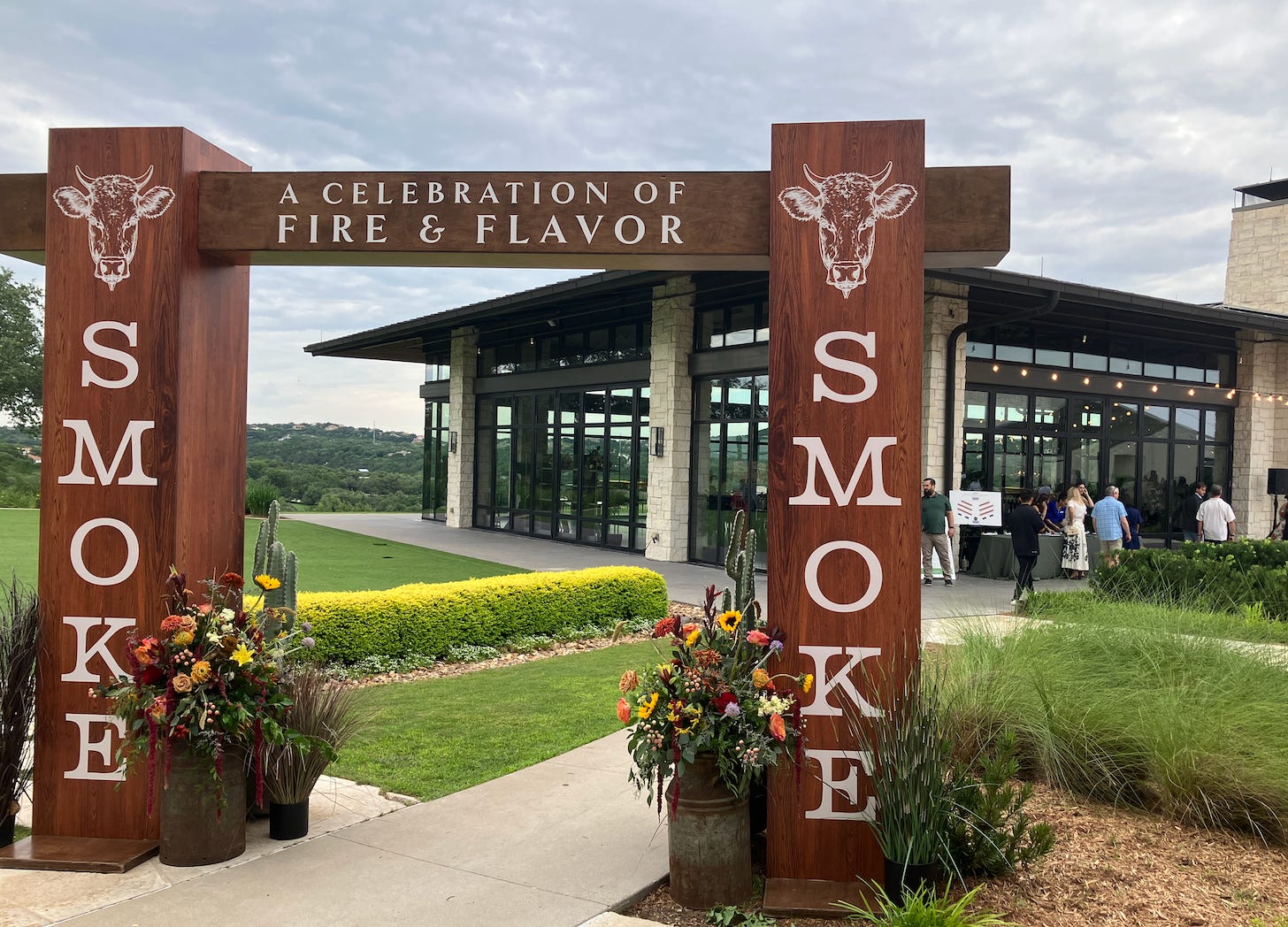
Two weekends ago, I was invited to be one of the celebrity judges at an event called Smoke: A Celebration of Fire and Flavor at the Omni Barton Creek, a resort just outside of Austin. (The organizers clearly have a loose definition of the word "celebrity.") You can see my Instagram feed for a recap of the event, though the Omni Barton Creek’s has much better visuals.
Since brisket prices and the fate of Texas barbecue have been much in the news lately, those topics were front of mind for me on the trip. I tacked on a couple days on the front end to tour some of Austin's newest barbecue joints as well as return to a few old favorites, and I'm here to report that while Texas brisket may be in a precarious state, the lamb game is going strong.
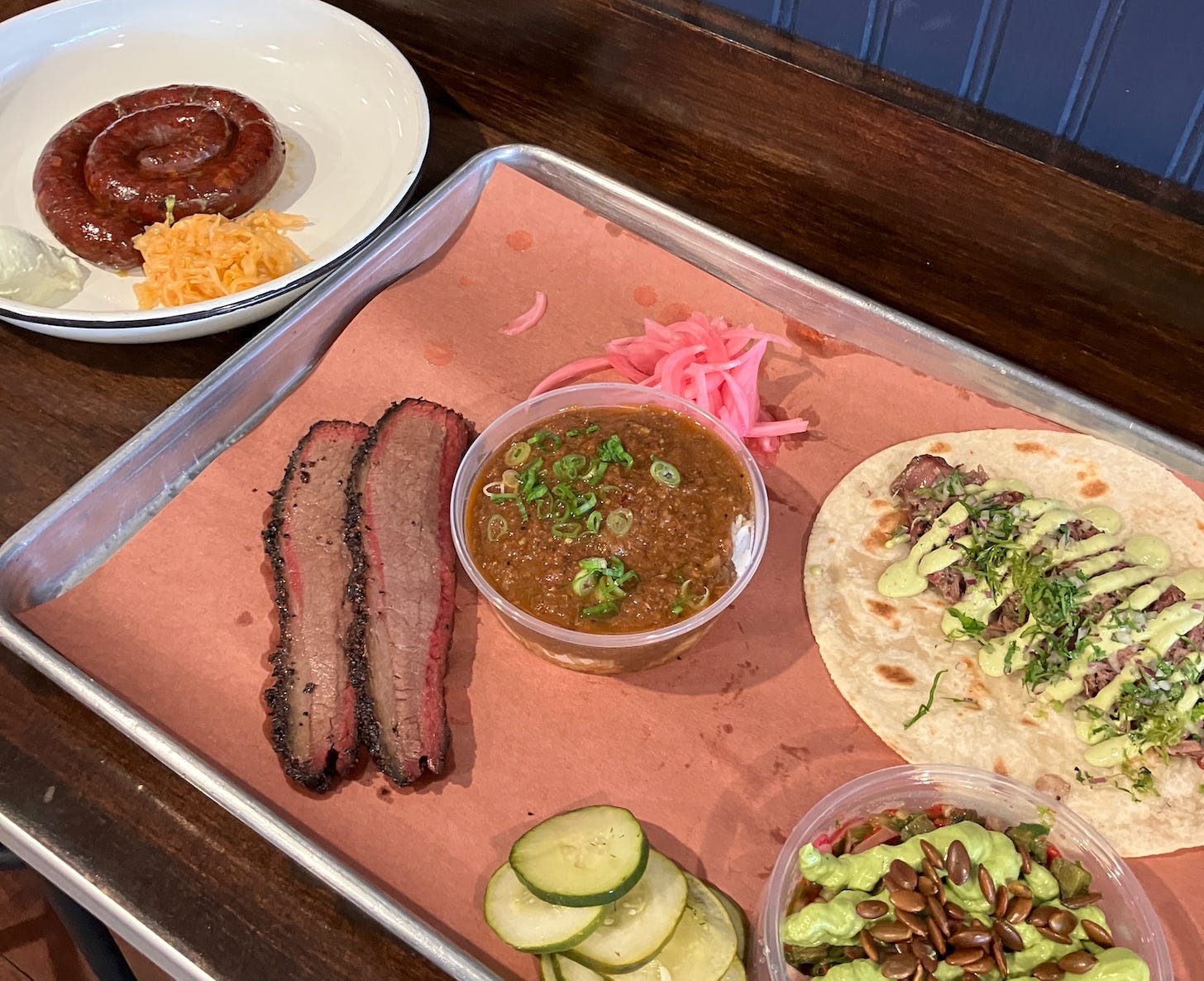
At Interstellar BBQ, I enjoyed a splendid taco loaded with juicy pulled lamb shoulder and finished with squiggles of creamy avocado salsa, diced onions, and cilantro. From the specials board, I ordered a coil of fragrantly-spiced lamb merguez sausage with a surprisingly thick, minty scoop of labneh and a little pile of orange harissa-laced sauerkraut. At $9, that taco cost considerably less than the two slices of lean brisket I got alongside (at $42 per pound). The merguez was priced at $18 for a half pound coil (i.e. $36 per pound), a little less than the brisket. Both it and the taco, I will note, come as fully-composed dishes, not solo proteins.
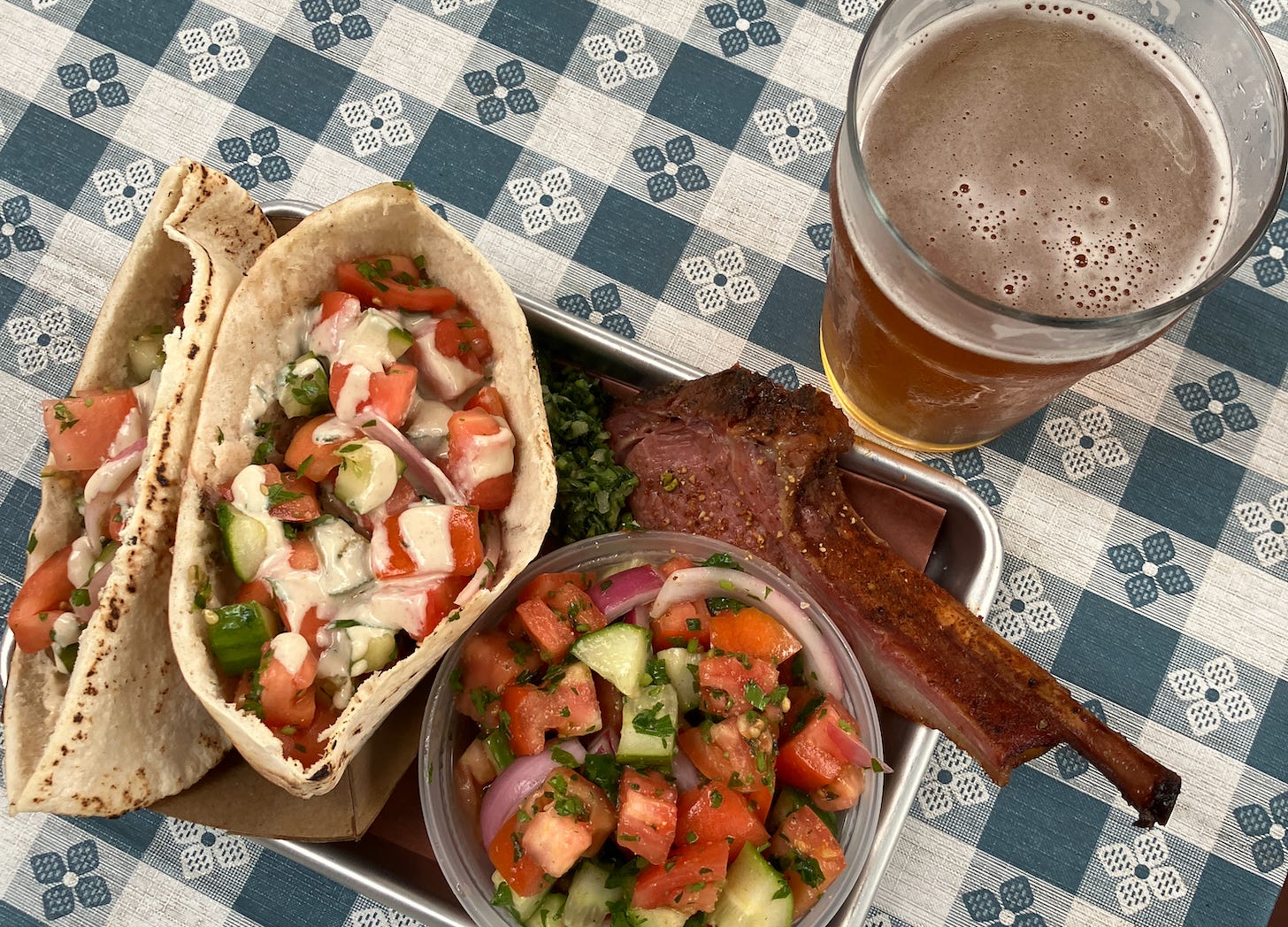
Across town at KG BBQ, which is now permanently located outside Oddwood Brewing, Kareem “The Egyptian Cowboy” El-Ghayesh has created a veritable lamb paradise. (He might need to be re-dubbed “The Egyptian Shepherd.”) Sure, you can order brisket if you really insist on it (at $38 per pound), but why take up much-needed tray space when there are smoked lamb chops, bone-in lamb belly (which KG has dubbed “lamb bacon ribs”), and pulled lamb shoulder accented with sumac and cinnamon?
That tender lamb chop, beautifully rosy medium rare, is one of the best barbecue bites I’ve had in a long time, with a great dose of smoke on the outside and a zip of spicy heat, too. Instead of just ordering a big pile of that savory lamb shoulder ($34 per pound), you can get it stuffed inside a fresh pita with herb-laced cucumber and tomato salad and a big drizzle of a tahini-esque sauce — a delightful combination that grows more delicious with each bite. At $9.50 per bone, the lamb chop is a little pricey, but one is really all you need since it is so packed with flavor. At $36 and $34 per pound, respectively, both the lamb belly and the lamb shoulder are less expensive than brisket.
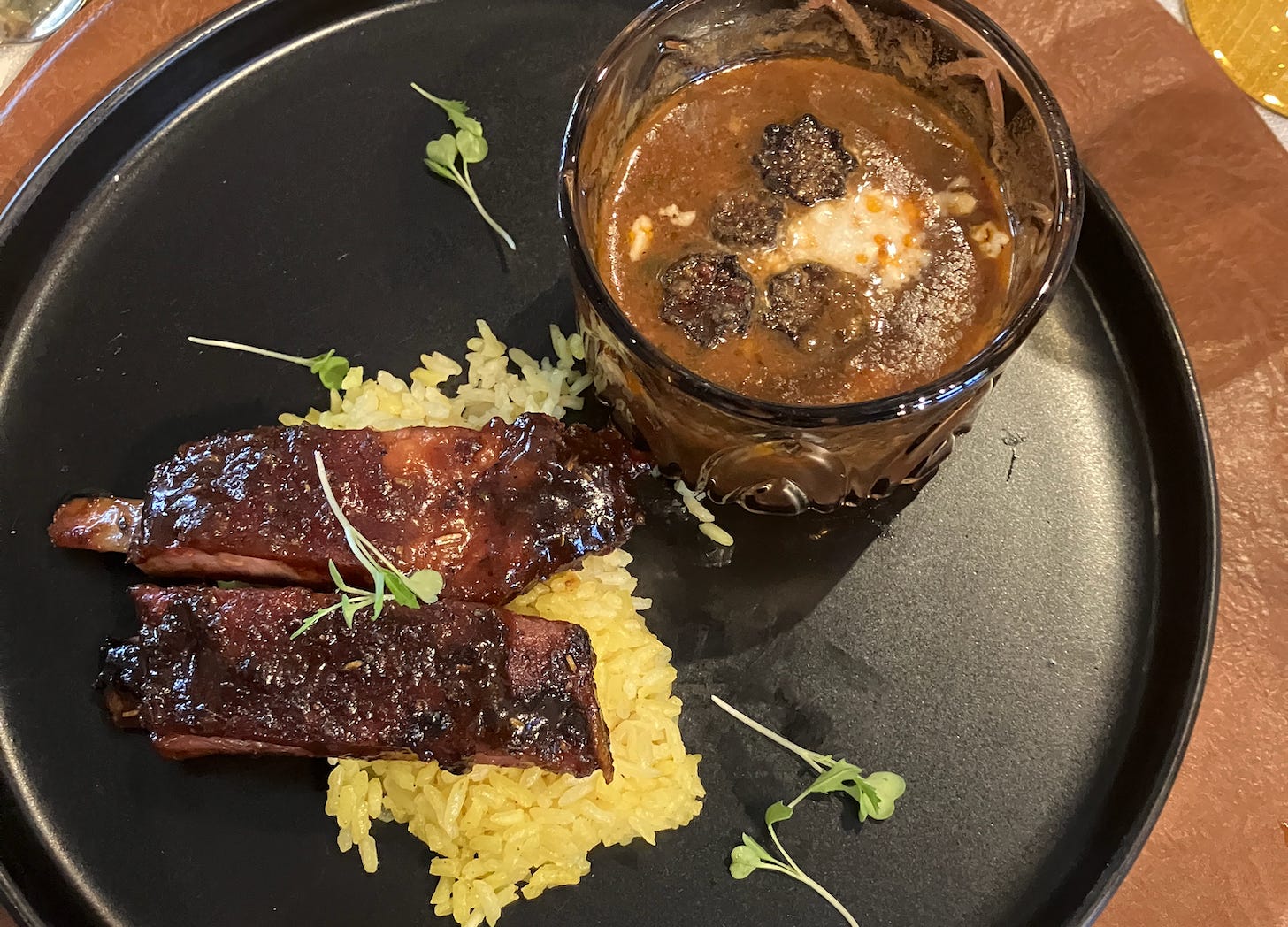
Out at the Smoke event, my favorite dish of the entire weekend was at Friday night’s Legends of the Flame dinner. It was prepared by Chris Lilly of Big Bob Gibson Bar-B-Q in Decatur, Alabama, and instead of anything made with pork, chicken or white sauce, he wowed us with lamb. (When in Rome, I guess . . .) The tender barbecued lamb ribs were glazed in rosemary fig sauce and served over Greek-spiced lemon rice. Even better was the accompanying little jar of smoked lamb gumbo with crisp-fried okra croutons bobbing on top.
All this got me thinking a heretical thought: might lamb be the future of Texas barbecue?
Yes, I know that at $34 to $36 per pound cooked, lamb isn’t exactly an economy barbecue cut. But, as I’ve discussed in past Cue Sheet dispatches, after World War II, American lamb consumption dropped dramatically, making it a niche and therefore more expensive product. Even today, it is considered a premium meat, often selling for 1.5 to two times the retail price of similar cuts of beef. Still, in the field, it is consistently less expensive than brisket these days.
Sheep, I will add, reproduce and reach market weight much faster than cattle. Ewes reach sexual maturity within five to eight months, compared to eight to 14 months for cows. (They apparently watch more TikTok.) Lambs, furthermore, have a gestation period of around five months and are ready for slaughter at six to eight months. This is compared to nine months gestation for a beef calf and between 18 and 24 months to reach slaughter weight.
In other words, American ranchers could ramp up lamb production much faster than they can beef. Even if all the loyal Cue Sheet readers race out and order every lamb dish they see on barbecue menus, the demand shouldn’t cause lamb prices to spike. Instead, if it encourages ranchers to raise more lamb, the price should actually start to come down over time.
Will brisket finally jump the shark before 2026 is out? Will lamb take its place at the top of Texas barbecue menus — the Laverne & Shirley to brisket’s Happy Days, if you will?
The upcoming months will tell. I, for one, would consider it an upgrade.
America’s First BBQ Restaurateur?
Just a fun bit from my historical barbecue research. In 1769, Thomas Carnes advertised in the Boston News-Letter that “if any select Company at any Time should incline to have a Barbecue, either Turtle or Pig,” then he would gladly accommodate them at his tea and coffee house outside of Boston.
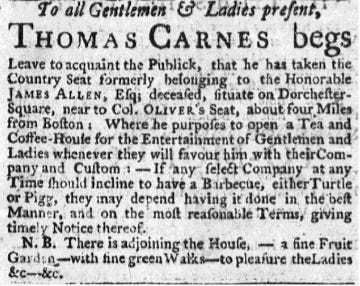
The ad was first printed on May 25th and was repeated several more times through June 15. Does this mean Thomas Carnes was America’s first barbecue restaurateur and that American’s first barbecue restaurant was in Boston?
Maybe turtle is the future of Texas barbecue.
Quick Bites
New Map, Old School: John Tanner of John Tanner’s Barbecue Blog has the scoop on an old-school North Carolina BBQ Map created by Alex Dunham of Zebulon. It charts North Carolina barbecue joints that have been open at least 30 years and still cook over wood.
ThermoPro or Thermapen? ThermoPro, the makers of a broad line of digital thermometers, has rebranded as TempPro. No official reason has been offered for the switch, but I have to imagine avoiding brand confusion with the Thermapen digital thermometers from ThermoWorks had to have been a consideration.
Studying Abroad: The Kansas City Star reports that international soccer fans visiting Kansas City for the World Cup games are flocking to local barbecue restaurants. Various barbecue joints told the Star their sales were up anywhere from 20 to 45% since the matches started.
Burnt Ends
Weighty Matters
If you’re a long-time Cue Sheet reader, you know I love playing a little game I call, “Watch the Headline Evolve.”
To recap: in the age of digital publication and click-optimization, the headline on an online story can change multiple times before and after it is published, unlike in a print newspaper or magazine. Sometimes the headline that you see might not be the one other readers saw, since today’s content management systems (CMSs) allow sites to A-B test multiple headlines for the same story, measure which gets the most clicks, and then set the top performer as the final version.
I spied a little headline evolution in an article the Houston Chronicle published last weekend advising readers on how much barbecue they should order at a Texas joint. I was able to reconstruct at least three versions:
“Texas Barbecue Math”: This is from the “slug”—the words that get appended on the URL (in this case, /texas-barbecue-math-22309538.php), which is usually auto-generated by the CMS from whatever working headline the editor used when first entering the article into the system. That first draft definitely needed some work, so I can see why it didn’t make the final cut.
“Weigh in. How much Texas barbecue is one person supposed to order?”: This version got enshrined in the title tag for the web page, which you can see if you hover your mouse pointer over the tab in your browser. It’s also what gets picked up by most search engines as the headline. If you Google “Houston Chronicle how much barbecue should I order,” the first result will have the “Weigh In” title.
"Wait. How much food are you actually supposed to order at Texas barbecue joints?” This is similar to the previous one, but wordsmithed a little. It’s the one that now shows on the Chronicle web site (or it least it does each time I visit.)
I am a little puzzled by the decision to replace “Weigh In” with “Wait,” unless it was the result of random A-B testing. Yes, the first version is a lame pun, but who doesn’t like lame puns? Besides, “weigh” more closely points to the actual topic of the story. (I will admit, though, that when it comes to Texas barbecue, “Wait” is often the first word that comes to mind . . . )
Besides, if you asked me to weigh in on how much Texas barbecue one person is supposed to order . . . well, you can probably guess my answer. (Unless it’s lamb, of course.)
This Guy Knows How to Party
“I always say that of the great things America has produced — the American Songbook, barbecue — somewhere in that top 5 for me is Federal Deposit Insurance.”
— Financial journalist Brendan Greeley on the Slate Money podcast
Leftovers from President McKinley’s Visit
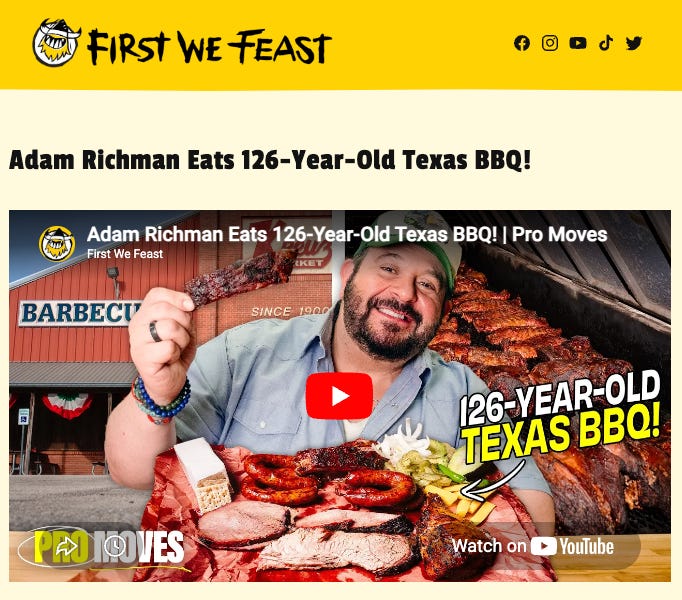
Don’t worry. Richman was just visiting Kreuz Market in Lockhart, which can trace its roots back to 1900. The barbecue itself was cooked fresh that day.
I Can’t Panda Bear It
Shout out to Tasting Table, a publication that manages to look like a legitimate, high-quality food site as long as you don’t read the articles.
In my last Cue Sheet dispatch, I poked fun at the fast-food chain Panda Express’s new “Cantonese BBQ Brisket,” which may well represent a new low water mark for American barbecue. (The prior one was McDonald’s introduction of the McRib in 1982.)
Of course, I didn’t actually go out and try the new offering myself, in part because I don’t know where the nearest Panda Express is. (I would guess at a mall?) Fortunately, the folks at Tasting Table are more diligent in their reporting. On Tuesday, the publication ran this powerful example of service journalism:
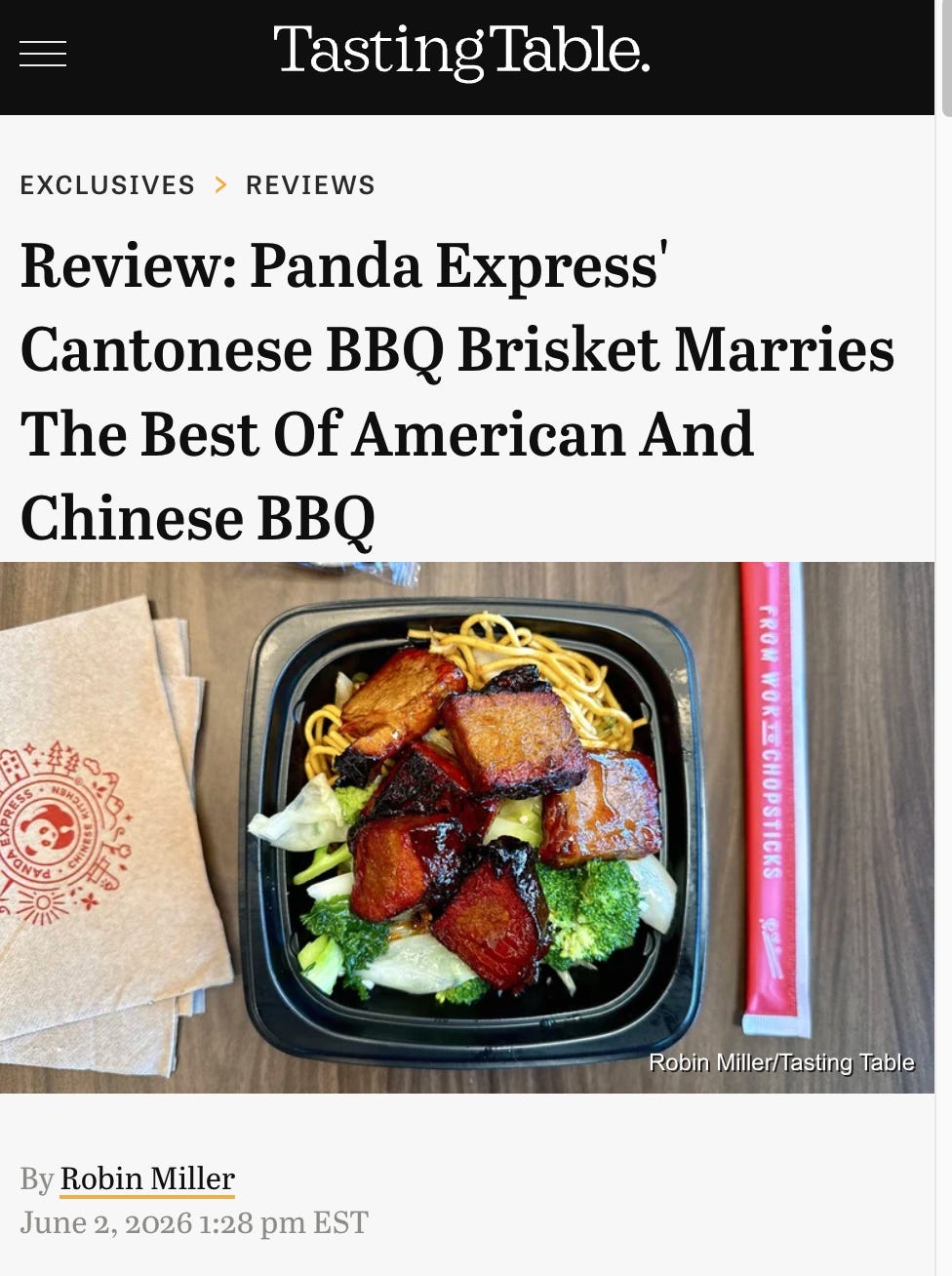
Yes, a full-on review, without a trace of irony, of Panda Express’s new Cantonese BBQ Brisket. It runs a full 1,100 words, complete with sections laying out the reviewer’s “methodology,” taste test results, and final determination.
Very scientific. Now if we could only find someone to peer review it.